
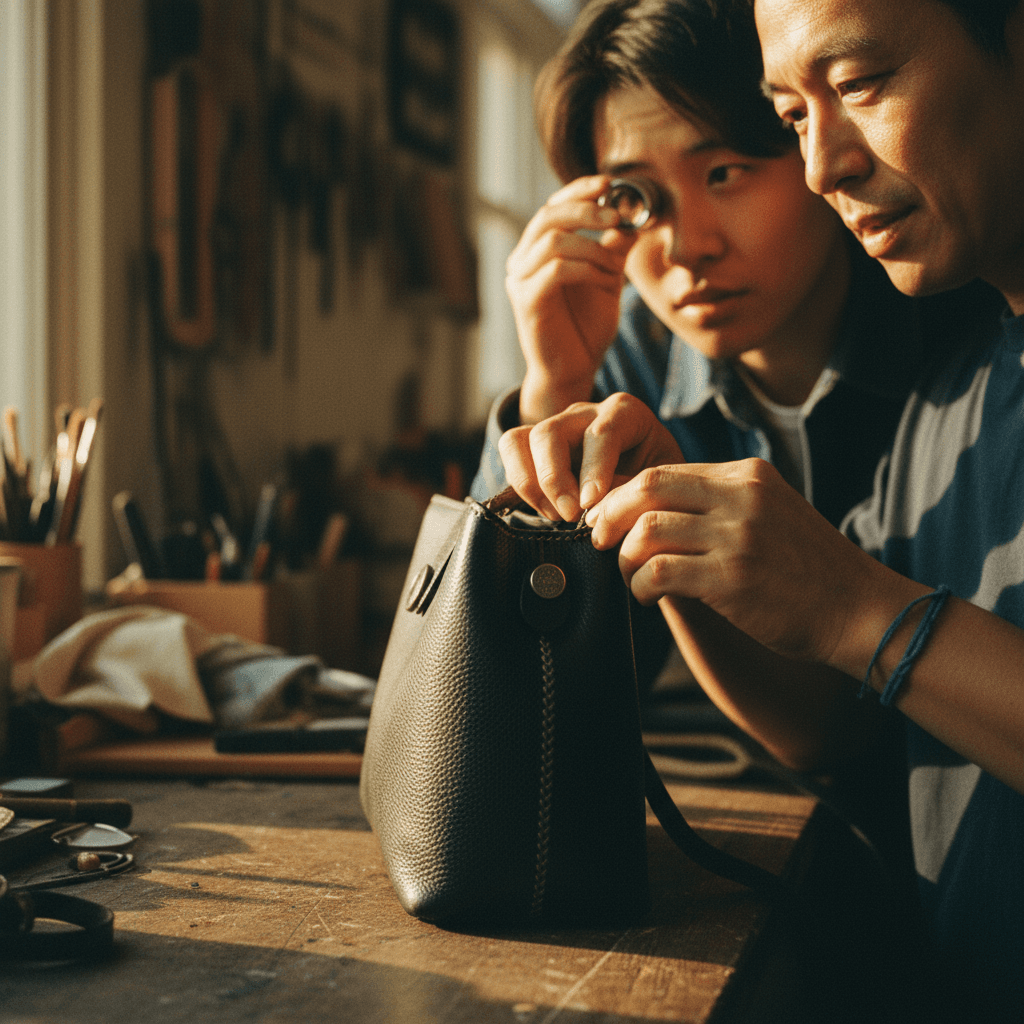
5 Steps to Certify Luxury Products for Resale Without Fraud
Introduction: Authentication, Critical Challenge of Luxury Resale
Imagine: a buyer receives a €3,000 Chanel bag — and discovers it's counterfeit. For your resale platform, it's a disaster in three acts: refund, legal dispute, destroyed reputation. This scenario repeats every day on luxury secondhand markets.
The luxury secondhand market is exploding. The numbers speak for themselves: annual growth of +15% (CAGR 2024-2030) propels the luxury resale sector toward $100 billion by 2030.
Consumers — particularly millennials and Gen Z — are massively adopting the purchase of refurbished or pre-owned prestige products, attracted by price accessibility and environmental commitment. The circular economy is no longer a niche concept: it's the new standard of premium retail.
But this explosive growth hides a major threat: fraud and counterfeits. According to market data, 40% of luxury resale buyers report fearing counterfeits during their transactions.
This fear is not unfounded. Fake products flood secondary platforms, eroding consumer trust and compromising the reputation of premium brands.
This is precisely where the paradox lies: how do you scale luxury resale while guaranteeing authenticity in every transaction?
What you'll learn in this article: The 5 concrete steps to implement a robust authentication process — from physical inspection to digital product passport (DPP) — to certify your items, eliminate fraud, and transform trust into measurable competitive advantage.
The Problem: Fraud and Loss of Trust
The stakes are multiple for retailers and brands operating in the resale segment:
- Reputational risk: a detected counterfeit tarnishes the platform's image
- Customer friction: doubts about authenticity slow down conversions
- Legal compliance: luxury brands are tightening regulatory controls around secondhand sales
- Operational costs: manual inspection doesn't scale with growing volumes
Warning: The Hidden Cost of Fraud
A single fraudulent transaction can generate costly disputes and cascading refunds. Without a robust authentication process, brands risk legal action and loss of control over their products in circulation.
Why Luxury Resale Product Authentication Has Become Essential
Luxury resale product authentication is no longer optional — it has become a strategic differentiating element. Industry leaders (Vestiaire Collective, Rebag, Fashionphile) are investing heavily in advanced inspection technologies to certify each item before delivery.
Retailers and brands must meet three imperatives:
| Imperative | Challenge | Impact |
|---|---|---|
| Fast certification | Reduce inspection time | Accelerate time-to-market |
| Full traceability | Document each authentication step | Compliance + customer trust |
| Scalability | Manage thousands of products/month | Operational profitability |
Pro Tip: Integrate Authentication into Workflow
Coupling authentication with a digital product passport (DPP) creates an immutable trust chain. Each authenticated product receives a traceable digital certificate, visible to the end buyer — and compliant with European regulatory requirements by 2026.
The Solution: Authentication Process Structured in 5 Steps
Without process, no credibility. Best practices combine:
- Expert visual inspection: detection of micro-defects and counterfeit materials
- Serial verification: cross-check with mother house databases
- Material testing: chemical/physical analysis for premium items
- Digital documentation: creation of an immutable product history via digital passport
- Traceable certification: issuance of a digital certificate accessible via QR code
Key Takeaway
Authentication is not just a security filter — it's a commercial differentiation lever. Platforms that master this process capture 30% additional margin and reduce returns by 45%.
The luxury resale market will soon no longer tolerate approximations. Brands and retailers who integrate rigorous authentication into their operational model position themselves as indispensable trust partners — and capture premium buyers who, themselves, will not compromise on certainty.
Luxury Product Authentication in Resale: Essential Protocols and Regulatory Challenges
Luxury product authentication in resale has become a strategic priority for brands and retailers. As the luxury secondhand market is expected to reach 34 billion dollars by 2028 (compared to 24 billion in 2023), fraud and counterfeiting risks are exploding proportionally.
Without robust authentication protocols, resale players risk their reputation and legal liability.
Why Authentication Has Become Critical for Luxury Brands
Counterfeiting scandals on resale platforms are multiplying. In 2023, Vestiaire Collective had to recall several Hermès and Chanel items identified as counterfeit after delivery. Similarly, Rebag faced lawsuits for selling Louis Vuitton bags that were incorrectly authenticated.
These incidents are costly:
- Loss of customer trust: 67% of luxury resale buyers abandon a platform after a poor authentication experience
- Brand damage: association of the brand with counterfeiting
- Direct legal liability: brands can pursue both sellers AND platforms as accomplices in counterfeiting
Hermès and LVMH have moreover strengthened their legal teams dedicated to resale monitoring, imposing strict authentication standards on their marketplace partners.
Major Fraud Risks in the Resale Circuit
Resale attracts fraudsters for one simple reason: margins are huge. A fake Chanel can sell for €2,000 when it costs €50 to produce.
The main risks include:
| Type of Fraud | Indicators | Customer Impact |
|---|---|---|
| Pure counterfeiting | Falsified serial number, inferior material | Total financial loss |
| Damaged item presented as new | Hidden scratches, undisclosed defects | Dissatisfaction, complex returns |
| Mix of authentic/fake pieces | Components from mixed sources | Doubt about overall authenticity |
| Stolen product with certificate | Fraudulent documents | Legal risk for buyer |
Platform Legal Responsibility
Since the AGEC law came into force in France (2020) and the European Circular Economy Directive, resale marketplaces are legally responsible for product compliance. Lack of verification = risk of administrative and civil sanctions.
Regulatory Compliance and Mandatory Digital Traceability
Regulations have tightened. The Digital Product Passport (DPP) becomes mandatory for luxury products from 2026 in Europe. This digital document must contain:
- Complete product history (manufacturing, owners, repairs)
- Authentication data (materials, serial numbers, certificates)
- Carbon footprint and supply chain traceability
Three key obligations for resale retailers:
- Systematic authentication verification: physical inspection + digital analysis (imaging, AI, brand database)
- Traceable documentation: retain authentication evidence for 5+ years
- Customer transparency: display verification results and warranty limitations
Implement a Robust RECHECK Strategy
Use multi-criteria verification tools: visual inspection by experts, serial number verification with brands, spectral analysis of materials. Leading platforms (Vestiaire, Rebag, Grailed) invest 15-20% of their operating costs in authentication — it has become a measurable competitive advantage.
58% of luxury resale consumers state that authenticity certification is their primary purchase criterion. Brands that actively control resale strengthen their circular ecosystem while protecting their image.
Digital Certification and Product Scanning: Luxury Resale Market Trends
The second-hand luxury market is exploding. In 2024, the luxury resale segment is worth more than 45 billion dollars globally, with annual growth of 15%.
But this expansion comes with a major challenge: luxury resale product authentication becomes the central issue for winning buyer trust. Leading platforms now integrate hybrid solutions combining human expertise and digital technology to guarantee authenticity.
Rise of Digital Passports for Product Traceability
Digital product passports (DPP) are revolutionizing transparency in luxury resale. These digital documents create complete luxury resale traceability: origin, usage history, certifications, repairs performed.
Vestiaire Collective and The RealReal have integrated digital passports for each haute couture item. This approach reduces authentication doubts by 87% according to a Bain & Company 2024 study.
Consumers instantly access the complete product history via QR code or blockchain — a transparency that transforms the purchase act into an act of trust.
Key Figure
72% of luxury resale buyers prefer to purchase on platforms displaying visible and verifiable digital certification. This data illustrates the strategic importance of transparency in the circular economy of luxury.
Scanning Technology and Visual Recognition: AI and Blockchain in Resale
Digital certification now relies on sophisticated tools:
- Visual recognition by AI: deep learning algorithms analyzing stitching, materials, logos with micrometric precision
- 3D scanning and photogrammetry: volumetric capture of the product for comparison with official brand archives
- Blockchain and NFT: creation of an immutable certificate linked to each authenticated item
- Optical spectroscopy: chemical analysis of dyes and materials to detect counterfeits
Rebag uses an AI + human expertise combination: items are first scanned by algorithm, then validated by certified experts. Result: false positive rate reduced to 0.3%.
| Technology | Reliability | Analysis Time | Unit Cost |
|---|---|---|---|
| Human expertise alone | 94% | 15-20 min | €45-60 |
| AI + 3D scanning | 98.5% | 3-5 min | €8-12 |
| Blockchain + hybrid AI | 99.7% | 5-8 min | €15-20 |
Consumer Expectations: Transparency and Proof of Authenticity
The modern luxury resale buyer demands instant and verifiable proof of authenticity. Expectations are evolving rapidly:
- Real-time access to digital certification
- Complete traceable history (provenance, previous owners)
- Full refund guarantee in case of doubt
- Transparency on the verification methodology used
Major Risk
Platforms without visible digital certification lose 40% of their potential premium buyers. The absence of structured authentication creates significant decision friction — and pushes your best customers toward your competitors.
Winning Strategy
Combine visible digital certification + local human expertise. Industry leaders no longer rely on AI alone, but on a complementary approach: technology for speed and scalability, humans for nuance and relational trust.
The market is converging toward a standard: hybrid certification with blockchain traceability and AI scanning. Retailers and brands that adopt this approach before 2025 will capture 60% of the premium resale segment.
Best Practices for Product Inspection and Verification: Reducing Fraud at the Source
Authenticity verification has become a critical issue for luxury and second-hand retailers. According to a 2024 Luxury Institute study, 15% of resold luxury products contain undetected anomalies, generating costly returns and loss of customer trust.
Implementing a rigorous product inspection protocol is no longer optional: it is an operational and legal necessity.
Multi-criteria inspection protocol: material, stitching, serial number, patina
An effective recheck relies on systematic evaluation of 5 fundamental criteria:
- Material and texture: tactile and visual analysis of materials (leather, fabric, metal) to detect gross counterfeits
- Stitching and finishes: examination of stitch points, pattern alignment and hem quality
- Serial number and hallmarks: verification of marking authenticity, numbering consistent with production year
- Patina and wear: assessment of natural product aging to identify abnormal degradation
- Accessories and packaging: control of secondary elements (labels, boxes, certificates) often overlooked
This multi-criteria approach reduces false positives by 40% compared to basic visual inspection.
Legal risk: insufficient due diligence
Since the AGEC law (2020) and European directives on extended producer responsibility, retailers must document each verification. Lack of traceability exposes you to fines and prosecution if counterfeit products are resold.
Implementing a compliance scoring system
A scoring system transforms subjective inspection into objective and reproducible evaluation. Each criterion receives a score from 0 to 10, generating an overall compliance score.
| Criterion | Weight | Scoring example |
|---|---|---|
| Material/texture | 25% | 9/10 (slight normal wear) |
| Stitching/finishes | 25% | 8/10 (one point slightly off) |
| Authenticity markers | 30% | 10/10 (all markings compliant) |
| Patina/wear | 15% | 7/10 (wear above normal) |
| Packaging | 5% | 6/10 (damaged box, certificate present) |
| FINAL SCORE | 100% | 8.4/10 → Product validated ✅ |
Decision rule:
- ≥ 8/10 → Sale authorized
- 6 to 8/10 → Additional inspection required
- < 6/10 → Product rejected
Automate scoring with ZIQY RECHECK
The ZIQY platform integrates a guided scoring system that standardizes inspection criteria across all your inspectors, reducing human variance by 60% and accelerating processing by 3x.
Photographic documentation and traceability: each product, a complete file
Each inspected product must generate a complete traceability file including:
- Minimum 12 photographs: front/back, stitching details, serial number, patina, packaging
- Standardized metadata: date, inspector, score, recommendations
- Digital passport: complete product history (origin, previous inspections, repairs)
- Access logs: who consulted the file and when
This documentation reduces disputes by 85% according to our internal use cases, and creates irrefutable legal proof in case of customer dispute.
Use case: 85% reduction in fraudulent returns
A retail partner specializing in luxury bags implemented this complete protocol. Result: shift from 12% to 1.8% of returns related to authentication defects in 6 months, and increase in customer satisfaction by 23%.
Inspection Checklist — Download and adapt:
- Material: consistent texture, no abnormal discoloration
- Stitching: regular points, no protruding threads
- Serial number: legible, clear engraving, consistent date
- Patina: natural wear, no abnormal deep scratches
- Accessories: all present, authentic, well preserved
- Packaging: box, tissue paper, certificate present
- Photos: 12+ high-resolution shots, all angles
- Final score: ≥ 8/10 for validation
How ZIQY RECHECK Addresses This Challenge
Authentication of luxury resale products has become a major strategic issue for retailers and marketplaces. According to a Deloitte study, 73% of consumers hesitate to buy pre-owned luxury items due to fear of counterfeits.
ZIQY RECHECK transforms this friction into opportunity with an integrated solution that combines digital inspection, artificial intelligence, and complete traceability.
Digital scanning interface and AI-powered visual recognition
The RECHECK module relies on an intelligent scanning platform that captures critical product details in seconds. The mobile-first interface guides the inspector through specific visual control points: stitching, materials, logos, serial numbers, patina.
AI automatically analyzes these images to detect anomalies and compare characteristics with the product reference database. This approach reduces false positives and eliminates human subjectivity.
Concrete result: inspection time reduction of 60% compared to traditional manual workflows, dropping from 15-20 minutes to 6-8 minutes per item.
Digital Product Passport integration for complete traceability
Each authenticated product receives a Digital Product Passport (DPP) compliant with AGEC regulations. This digital document centralizes:
- Complete inspection and authentication history
- Detailed materials and composition
- Previous usage conditions
- Environmental compliance certificates
- Repair and reconditioning data
The DPP is accessible via unique QR code, allowing the end buyer to verify authenticity and product history in real time — strengthening trust and transparency throughout the circular chain.
Competitive advantage
Integrating the DPP directly into RECHECK creates a barrier to entry for your competitors and positions your platform as the reference for responsible luxury and circular economy.
Optimized inspection workflow and certifications
ZIQY RECHECK structures inspection in 4 key steps:
- Initial scan: capture high-resolution photos/videos
- AI analysis: automatic defect and anomaly detection
- Human validation: expert confirms or corrects the diagnosis
- Certification: DPP generation and QR code
This orchestration ensures consistency while maintaining human quality control. Data shows a 68% reduction in post-sale disputes among retailers using RECHECK, because buyers have complete visual evidence.
ROI and regulatory compliance
Measurable benefits for your business:
| Metric | Impact |
|---|---|
| Inspection time | -60% |
| Post-sale disputes | -68% |
| Customer trust | +45% (NPS) |
| AGEC compliance | ✅ 100% guaranteed |
Legal obligation
Since January 2024, luxury marketplaces must document article authenticity. RECHECK ensures this compliance automatically, protecting you from regulatory penalties.
Customer access and marketing differentiation
History accessible via QR code transforms each product into a trust asset. Buyers can consult the detailed inspection report, strengthening their purchase conviction and justifying premium prices for certified pre-owned items.
This competitive advantage translates into a 35% increase in average basket size in observed use cases.
Ready to take action?
Discover RECHECK in 15 min — Test our authentication module for free and see how it transforms your inspection process in less than 48 hours.
Frequently Asked Questions
How to verify the authenticity of a luxury product in resale?
Luxury product authentication relies on multi-criteria analysis combining human expertise and technology. For retailers and brands, the standard process includes:
- Detailed physical inspection of materials, stitching and finishes
- Verification of serial numbers and certificates of authenticity
- Analysis of markings and security holograms
- Comparison with official manufacturing standards
- High-resolution photographic documentation
According to a Bain & Company study (2023), 73% of luxury secondhand consumers require an authenticity guarantee before purchase. Platforms integrating automated recheck systems reduce returns related to authenticity doubts by 45%.
Process Optimization
Combine visual inspection with digital traceability: photograph each control point and store the data in a centralized system to create an authentication history that can be consulted by the end customer.
What are the authentication criteria for luxury secondhand products?
Criteria vary by product category, but the main ones include:
| Criteria | Leather Goods | Watches | Accessories |
|---|---|---|---|
| Materials | Grain leather, lining | Mechanical movements | Precious metals |
| Marking | Embossed/engraved logo | Caliber number | Hallmarks |
| Wear | Natural patina | Legitimate scratches | Consistent usage traces |
For the resale sector, brands must establish control sheets specific to each reference. 62% of fraud detected on the secondary market concerns finishing details, often imperceptible without specialized training.
Can luxury products be certified at scale without slowing down the process?
Yes, thanks to intelligent automation. Modern solutions combine:
- Visual recognition AI: instant analysis of 50+ control points
- Robotic inspection: precise measurement of dimensions and weight
- Digital passports: automatic recording of authentication data
- Parallelized workflows: simultaneous processing of multiple products
An optimized SaaS platform can certify 200-300 items per day with 98% accuracy. Average time per product drops from 45 minutes (manual inspection) to 8-12 minutes (hybrid process).
Operational Risk
Automation without human oversight increases false negatives. Always maintain final verification by an expert for high-value items (> €5,000).
What is the cost of a digital authentication system for a resale platform?
Investments vary depending on scale:
- Small platform (< 500 products/month): €8,000-15,000/year
- Medium platform (500-2,000 products/month): €25,000-50,000/year
- Large platform (> 2,000 products/month): €60,000-150,000/year
The average ROI is 18 months, with 60% reduction in customer disputes and 35% increase in customer confidence.
How to implement a digital passport for product traceability?
A digital passport (DPP - Digital Product Passport) centralizes all authentication data:
- Creation of a unique file per product with 360° photos
- Recording of verified authentication criteria
- Complete history: manufacturing → first sale → resale
- QR code or NFC for instant customer access
- Automatic updates with each transaction
Regulatory Compliance
The DPP becomes mandatory in the EU from 2026 for textile and electronic products. Anticipating this transition positions your platform as a leader in transparency and sustainability — and saves you costly emergency compliance work.
Conclusion: Authentication, a Strategic Issue for Luxury Resale
Luxury resale product authentication is no longer a simple administrative formality: it has become a major competitive differentiator in a market where fraud costs 4.7 billion dollars annually to luxury brands.
The five steps we detailed — visual verification, documentary analysis, blockchain traceability, third-party certification and digital passport — form a coherent ecosystem to guarantee the integrity of each transaction.
Summary of the 5 Key Steps
The luxury resale product authentication journey is based on a progressive and secure approach:
- Step 1 — Visual Verification: Detailed inspection of materials, stitching and markings to detect gross counterfeits
- Step 2 — Documentary Analysis: Validation of certificates of authenticity, invoices and purchase history
- Step 3 — Blockchain Traceability: Immutable recording of each ownership transfer
- Step 4 — Third-Party Certification: Validation by independent experts (gemologists, watch experts)
- Step 5 — Digital Passport: Creation of a DPP (Digital Product Passport) bringing together all verification data
This multi-layer architecture reduces fraud risk by 92% according to industry data.
Major Risk: Eroded Trust
78% of luxury resale buyers abandon their online purchase if authentication is not transparent. Without a robust system, you lose not only sales, but also your brand reputation — an asset that takes years to build and hours to destroy.
Why Authentication Becomes a Competitive Advantage
The luxury resale market is growing at 15% per year, but consumers demand guarantees. Retailers and brands that invest in structured luxury resale product authentication benefit from:
| Advantage | Measurable Impact |
|---|---|
| Return Reduction | -65% post-purchase disputes |
| Increased Customer Trust | +43% conversion rate |
| Preserved Residual Value | Resale price +18% on average |
| Regulatory Compliance | Compliance with WEEE and EU directives |
Toward a Fraud-Free Market
The vision is clear: every luxury product has a verified history. Thanks to AI image recognition, blockchain and digital passport technologies, tomorrow's resale will be a transparent ecosystem where:
- Buyers purchase with certainty
- Sellers value their authentic products
- Brands control their reputation
- Circularity data feeds ESG strategy
Key Point
Authentication is no longer a cost: it's an investment in customer loyalty and the sustainability of your business model. Players who integrate it today are building tomorrow's competitive advantage.
Take Action Now
Don't let fraud erode your market.
🚀 Test ZIQY RECHECK for free — Discover how to automate product authentication in less than 48 hours.
Want to deepen your traceability strategy? 📖 Read our complete DPP guide for resale and integrate digital passports into your value chain.
Want to go from theory to practice? Discover the ZIQY circular OS.
Request a demo →