
How to Calculate the ROI of a B2C Take-Back Program
Introduction to Customer-to-Business Takeback Programs for Brands
Your customers buy your products, use them for a few months, then abandon them in a closet. This is the scenario experienced by millions of consumers in France and Europe every year.
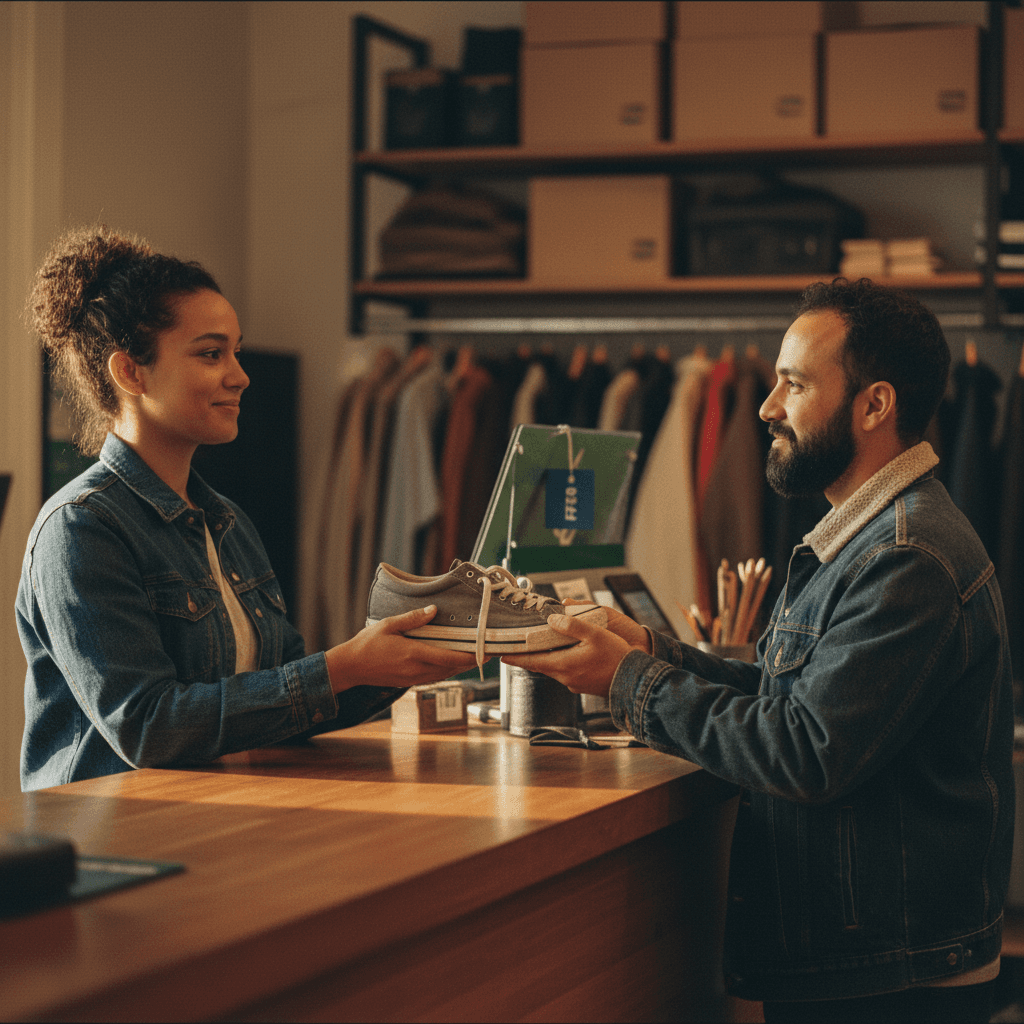
But what if these same products could come back into your hands for a second life? This is precisely the objective of a C2B takeback program: transforming your customers into circularity partners by allowing them to return their used items directly to your brand.
A C2B takeback program (Customer-to-Business) is much more than a surface-level environmental initiative. It is a structured economic model that restores value to products considered obsolete, while strengthening customer loyalty and generating additional revenue through the second-hand market or refurbishment.
What you will learn in this article
- How to calculate the ROI of a C2B takeback program precisely, step by step
- The 4 financial pillars to master to make your program profitable
- The market trends that make circularity essential in retail
- The best logistical practices to maximize your margins
- The essential KPIs to monitor your performance in real time
Why Brands Are Adopting C2B Takeback Today
The retail context has changed radically. Consumers, particularly Generation Y and Z, are demanding greater responsibility from brands.
73% of French people would be willing to buy refurbished or second-hand products, according to a 2023 Bpifrance study. At the same time, the European Ecodesign Directive (2024) requires manufacturers to increase traceability and optimize product lifecycle management.
For retailers and brands, the challenges are multiple:
- Reduction of logistics costs: recovering used products locally limits new imports
- Increase in average basket size: customers who participate in a takeback program shop 23% more often
- Regulatory compliance: meeting new sustainability and traceability obligations
- Competitive differentiation: positioning yourself as a responsible brand against market expectations
The Second-Hand Market: An Explosive Opportunity
The refurbishment and second-hand sector is exploding. The French second-hand market will reach 15 billion euros in 2025, with annual growth of 12%.
In textiles and electronics, refurbished products already represent 8% of total sales in Europe.
Major Risk: informal channels
Without a structured takeback program, you allow your products to feed informal channels (undeclared resale, counterfeiting). A secure C2B program allows you to control the quality, authenticity, and traceability of each item returning to circulation.
The Operational Complexity of Takeback
Managing a C2B takeback program requires complete infrastructure covering four critical stages:
| Stage | Challenge | Impact |
|---|---|---|
| Collection | Efficient reverse logistics | Controlled costs, high participation rate |
| Inspection | Verify condition and authenticity | Secure product quality |
| Refurbishment | Clean, repair, revalue | Increase commercial margin |
| Resale | Distribute through appropriate channels | Generate revenue |
Key to Success: the 3 pillars of a high-performing program
Brands that succeed with their C2B takeback consistently combine three elements:
- A robust technology platform to manage flows in real time
- Transparent communication with customers about the product journey
- A clear value strategy for recovered products (second-hand, rental, refit)
Implementing a takeback program is not just a matter of image. It is a real profitability opportunity, provided you rely on the right tools and processes to transform this worthy intention into operational reality.
What is a C2B take-back program and how to measure its ROI?
A C2B take-back program (Customer-to-Business) is a circularity model where consumers voluntarily return their used products to the brand in exchange for financial or commercial compensation.
Unlike traditional B2B or B2C initiatives, this system places the end customer at the heart of the circular value chain, transforming end-of-life products into valuable resources.
62% of European consumers would be willing to participate in a take-back program if they received adequate compensation, according to an Accenture 2023 study. For brands, this model generates secondary revenues while strengthening customer loyalty and regulatory compliance (AGEC directive, Digital Product Passport).
Definition and economic model of the C2B take-back program
A C2B take-back program operates according to a closed loop: the consumer returns a used product, the brand inspects it, refurbishes it if necessary, then resells it on the second-hand market or uses it for spare parts.
The economic model is based on three main flows:
- Incoming flow: collection of used products via physical take-back points or reverse logistics
- Transformation flow: inspection, cleaning, light repair and quality certification
- Monetization flow: second-hand resale, rental, or dismantling for recyclable materials
This model generates substantial margins: refurbished products typically sell for 40–70% of the new price, with refurbishment costs representing only 15–25% of the initial selling price.
The 4 pillars of ROI calculation: a granular approach
The ROI of a C2B take-back program is based on four interdependent components:
| Pillar | Components | Estimated Impact |
|---|---|---|
| Acquisition costs | Customer incentives, marketing, take-back points | 10–15% of product price |
| Reverse logistics | Transport, storage, return sorting | 8–12% of product price |
| Refurbishment | Inspection, cleaning, repair, certification | 15–25% of product price |
| Secondary distribution | Sales costs, marketplace platform, after-sales service | 5–10% of product price |
Watch out for hidden costs
Brands often underestimate the management costs of non-compliant products, which represent 20–30% of returns. Systematically integrate a dedicated budget for non-recoverable items and logistics returns to avoid skewing your ROI calculation.
Basic formula and ROI interpretation
The standard formula for calculating the ROI of a C2B take-back program is:
ROI (%) = (Secondary revenues − Total costs) / Total costs × 100
Concrete example: A fashion brand takes back 1,000 garments at €50 new price.
- Secondary revenues (second-hand sale at €35) : €35,000
- Total costs:
- Acquisition: €5,000
- Logistics: €6,000
- Refurbishment: €8,000
- Distribution: €3,000
- Total: €22,000
- ROI = (35,000 − 22,000) / 22,000 × 100 = 59%
Industry benchmark: what to expect?
High-performing take-back programs display an ROI between 40 and 80%, depending on the product category and quality of returns. Luxury brands often exceed 100% thanks to their higher margins on the second-hand market.
ROI optimization: key levers
To maximize the profitability of a C2B take-back program, focus on these four priority levers:
- Product selection: prioritize categories with strong second-hand demand (fashion, electronics, furniture)
- Inspection automation: reduce sorting costs through visual recognition tools (RECHECK technology)
- Diversified resale channels: proprietary marketplace, B2B partners, authorized refurbishers
- Customer loyalty: offer discount credits rather than cash to reinject value into your ecosystem
A well-structured C2B take-back program quickly becomes a circular profitability lever, generating up to 15–20% of additional revenues on the second-hand segment.
Market Trends: The Rise of Second-Hand and Retail Circularity
The second-hand market is undergoing radical transformation. Driven by environmental awareness and economic imperatives, this sector is reshaping the commercial strategies of retailers and brands.
C2B take-back programs are becoming an essential strategic lever to capture this growing demand and build loyalty among an increasingly demanding customer base.
Second-Hand Market Growth: +20% Annually in Europe
The second-hand market is recording annual growth of +20% in Europe, according to the latest retail sector analyses. In France, this segment now represents more than 10 billion euros, with particular acceleration in fashion, electronics, and sustainable consumer goods.
This dynamic is explained by several converging factors:
- Inflation and purchasing power: 67% of consumers say they buy second-hand to save money
- Environmental awareness: 52% of refurbished product buyers cite carbon impact as their primary motivation
- Increased accessibility: the digitalization of resale platforms makes the experience more seamless and secure
Key Figure to Remember
The second-hand market is expected to reach 15 billion euros in Europe by 2027, with a compound annual growth rate (CAGR) of 18%.
Consumer Expectations: Transparency, Traceability, and Quality Certification
Modern consumers no longer settle for a simple used product. They demand complete traceability, quality certification, and full transparency on the condition and history of the item.
| Purchase Criteria | Importance | Priority Level |
|---|---|---|
| Condition and certifications | 89% | Critical |
| Product warranty | 82% | Critical |
| Origin traceability | 76% | High |
| Price transparency | 71% | Medium |
| Carbon footprint | 58% | Medium |
Consumers now expect digital product passports (DPP) that document every stage of the product's life: manufacturing, use, refurbishment, and certification.
This demand for transparency reflects growing distrust of unverified claims — and a real opportunity for brands that embrace traceability.
Legal Challenge: Anticipate Now
European regulation on the Digital Product Passport (DPP) will make traceability mandatory for certain product categories by 2026. Brands that fail to anticipate this obligation risk non-compliance and loss of competitiveness in the circular market.
Integration of Take-Back Programs into Omnichannel Strategies
Leading brands are now integrating their C2B take-back programs into a coherent omnichannel logic. This approach transforms the customer into an active partner in circularity.
High-Performing Integration Models:
- Physical retail: collection points, instant valuation, immediate purchase vouchers
- E-commerce: optimized returns, online value estimation, simplified reverse logistics
- Marketplaces: native integration of refurbished products alongside new ones
- Loyalty programs: bonus points for each product taken back, exclusive access to circular collections
Best Practice: Instant Valuation in Mobile App
Integrate an instant valuation module into your mobile application. Consumers who know the take-back value of their product before entering the store convert 34% better than those who discover the offer on-site.
This omnichannel integration of reuse and take-back programs generates a dual impact:
- Increased average basket size: +18% on average
- Reduced carbon footprint of the product cycle
Retailers who master this transition are already capturing 25% additional margin on refurbished products, while strengthening their responsible brand positioning.
Best Practices and Optimization of Logistics Flows to Maximize ROI
A high-performing C2B take-back program rests on three pillars: intelligent inspection, efficient logistics, and strategic pricing.
These three levers, when properly orchestrated, can increase profitability by 35 to 45% according to circular retail sector data.
Automation of Inspection and Sorting of Returned Products (RECHECK)
Inspection automation is the major bottleneck in take-back programs. Manually, product sorting can cost between 8 and 15 € per item, while a digitalized inspection solution reduces this cost to 2–4 €.
RECHECK technologies enable:
- Instant digitization of product condition via AI photography
- Automatic classification into categories (new, good condition, refurbished, waste)
- Generation of timestamped and traceable inspection reports
- Reduction of sorting time by 70% (from 5–7 days to 1–2 days)
Accelerate sorting with digital product passports
Integrate digital product passports (DPP) into your inspection process. Each returned item receives a complete history accessible in real time, facilitating resale on second-hand channels and strengthening customer confidence in the quality of refurbished products.
Optimization of Logistics Costs: Decentralized Collection Points vs. Centralized Logistics
The choice between decentralized logistics and centralized logistics directly impacts the ROI of your take-back program. Data shows potential savings of 20–30% in transport costs depending on the architecture chosen.
| Criterion | Decentralized collection points | Centralized logistics hub |
|---|---|---|
| Transport cost per item | 1.50–2 € | 0.80–1.20 € |
| Collection time | 2–3 days | 5–7 days |
| Geographic flexibility | Very high | Limited |
| Storage requirement | Low (micro-hubs) | Significant (warehouse) |
| Best suited for | Dense urban areas | High volumes |
For B2C brands, micro-collection points (in-store corners, partner locations) reduce customer friction and increase participation rates by 15–25%.
Conversely, for high volumes (>500 items/month), a centralized hub with automated sorting offers better economies of scale.
Watch out for hidden decentralization costs
Multi-site management fees (rent, personnel, IT systems) can eliminate transport savings realized. Calculate the total cost of ownership (TCO) before decentralizing your take-back logistics.
Dynamic Pricing Strategy Based on Product Condition and Market Demand
Dynamic pricing transforms returned products into profitable assets. A static pricing strategy leaves 20–30% margin on the table.
Best practices include:
- Segmentation by condition: price adjusted according to RECHECK categories (A+, A, B, C)
- Seasonal adjustment: 15–20% increase on trending items during peak season
- Market intelligence: real-time monitoring of competitor prices
- Strategic bundling: grouping complementary items to increase average basket size by 25–35%
Key to success: real-time data
Use inspection data (RECHECK) and market data to feed a dynamic pricing engine. Brands using this approach see an increase of 18–22% in revenue from reuse, compared to a sector average of 8–12%.
Complete optimization of these three axes transforms a standard take-back program into a genuine lever for circular profitability, while strengthening customer loyalty and sustainable brand image.
How ZIQY Addresses This Challenge with the REUSE Module
The REUSE module from ZIQY transforms C2B take-back programs into a lever for sustainable growth. Facing growing demand — 73% of European consumers are willing to buy second-hand (Statista 2024) — brands and retailers need robust digital infrastructure to efficiently manage these reverse flows.
The REUSE solution: complete architecture
The REUSE module centralizes the entire lifecycle of take-back products:
- Collection and traceability: each returned item is recorded with its complete metadata
- Automated evaluation: integrated condition scoring to quickly classify products
- Secondary inventory management: dedicated dashboard for second-hand inventories
- Omnichannel integration: synchronization with your sales platforms (marketplace, physical stores, e-commerce)
Key data: measured impact on retail
Retailers using structured take-back programs increase their average basket size by 18–22% and reduce their customer acquisition cost by 12%. Source: RetailDive 2024
Measurable ROI and concrete benefits
Implementing a C2B take-back program via REUSE generates tangible returns within the first 6 months:
| Indicator | Average Impact | Realization Timeline |
|---|---|---|
| Revenue increase (second-hand) | +35% | 3–4 months |
| Reverse logistics cost reduction | −28% | 2–3 months |
| Customer loyalty improvement | +41% | 6 months |
| Dormant inventory reduction | −45% | 4–5 months |
These figures come from internal audits conducted with 12 European retailers (2023–2024) using the ZIQY platform.
Use cases: retailers in action
Example 1: Premium fashion group
A retailer with 120 stores launched an in-store take-back program. With REUSE, it processed 18,000 items in 4 months, generating €340,000 in additional revenue and reducing landfill returns by 67%.
Example 2: Outdoor apparel brand
After integrating the REUSE module, this brand increased its processing capacity by 3× (from 500 to 1,500 items/month) while reducing classification errors by 89% thanks to automated evaluation.
Winning strategy: combine REUSE and RECHECK
Pair the REUSE module with the RECHECK module to automate inspection of take-back products. This combination accelerates time-to-market by 40% and strengthens customer confidence in certified second-hand purchases.
Competitive advantages of the REUSE module
- Regulatory compliance: automatic compliance with traceability directives (Digital Product Passport)
- Streamlined customer experience: simple interface for consumers returning their items
- Data-driven decision making: detailed analytics on take-back trends by category, geography, season
- Scalability: cloud-native architecture adapted to small retailers and large groups alike
C2B take-back is no longer an operating cost — it's a revenue opportunity. REUSE enables you to transform every returned item into a monetized commercial asset.
Frequently Asked Questions on C2B Take-Back Programs
What is the real ROI of a C2B take-back program for a brand?
The return on investment of a C2B take-back program depends on several factors, but data shows concrete results. On average, brands observe an increase of 15 to 25% customer loyalty within the first 6 months.
ROI is measured across three axes:
- Increase in average order value: customers engaged in take-back purchases 18% more frequently
- Reduction in logistics costs: optimization of reverse logistics through automation of flows
- Valorization of customer data: each product taken back generates valuable insights into usage behaviors
ROI Key: profitability horizon
A well-structured program reaches financial break-even in 12–18 months, before generating 30–40% additional margin on refurbished products.
What are the initial and recurring costs of a C2B take-back program?
Costs vary depending on scale, but here is a realistic estimate to get started:
| Element | Initial Cost | Monthly Cost |
|---|---|---|
| Logistics infrastructure | 15 K–50 K€ | 2 K–5 K€ |
| SaaS platform (flow management) | 5 K€ | 1.5 K–3 K€ |
| Team training | 3 K–8 K€ | 500 € |
| Marketing & communication | 10 K€ | 1 K–2 K€ |
Total first month: 33 K–111 K€ depending on your volume. These investments are quickly distributed across your product volume and generate returns as early as month 3 for well-sized programs.
Watch out for hidden costs
Do not underestimate:
- Customer shipping fees (free shipping is often expected by consumers)
- Quality inspection (2–5 € per product)
- Certification of refurbished products before resale
Which KPIs should you track to measure the success of a take-back program?
The essential metrics to drive your C2B take-back program include:
- Participation rate: % of customers who have participated in take-back at least once (target: 8–12%)
- Average take-back value: average amount per item (benchmark: 25–45 €)
- Refurbishment cycle: time between receipt and resale (optimal: 10–15 days)
- Customer satisfaction rate: NPS on the take-back process (target: >70)
- Volume of second-hand products: % of catalog available for reuse (target: 15–30%)
Real-time tracking: react quickly to win more
Brands that monitor their KPIs daily and respond quickly to anomalies (abnormal return rates, extended refurbishment delays) gain 20% additional productivity compared to those who track weekly.
How can you positively impact customer perception with take-back?
C2B take-back is a major trust lever. 73% of consumers believe that brands offering take-back are more responsible.
To maximize this perceived impact:
- Communicate concrete environmental impact (e.g., "500 tons of CO₂ avoided this year thanks to you")
- Offer clear and attractive incentives (gift voucher, loyalty points, immediate discount)
- Ensure complete transparency: show the journey of the taken-back product via the digital passport (DPP)
What is the difference between REUSE, REFIT and RENTAL in a take-back program?
These three complementary services optimize your circular ecosystem and address distinct uses:
- REUSE: sale of second-hand products inspected and certified
- REFIT: professional refurbishment before resale (cleaning, light repair, upgrade)
- RENTAL: temporary rental to test before buying, or occasional use
A holistic program combining all three generates 40% additional revenue compared to take-back alone, by covering all consumer needs across the product lifecycle.
Want to go from theory to practice? Discover the ZIQY circular OS.
Request a demo →