
Introduction
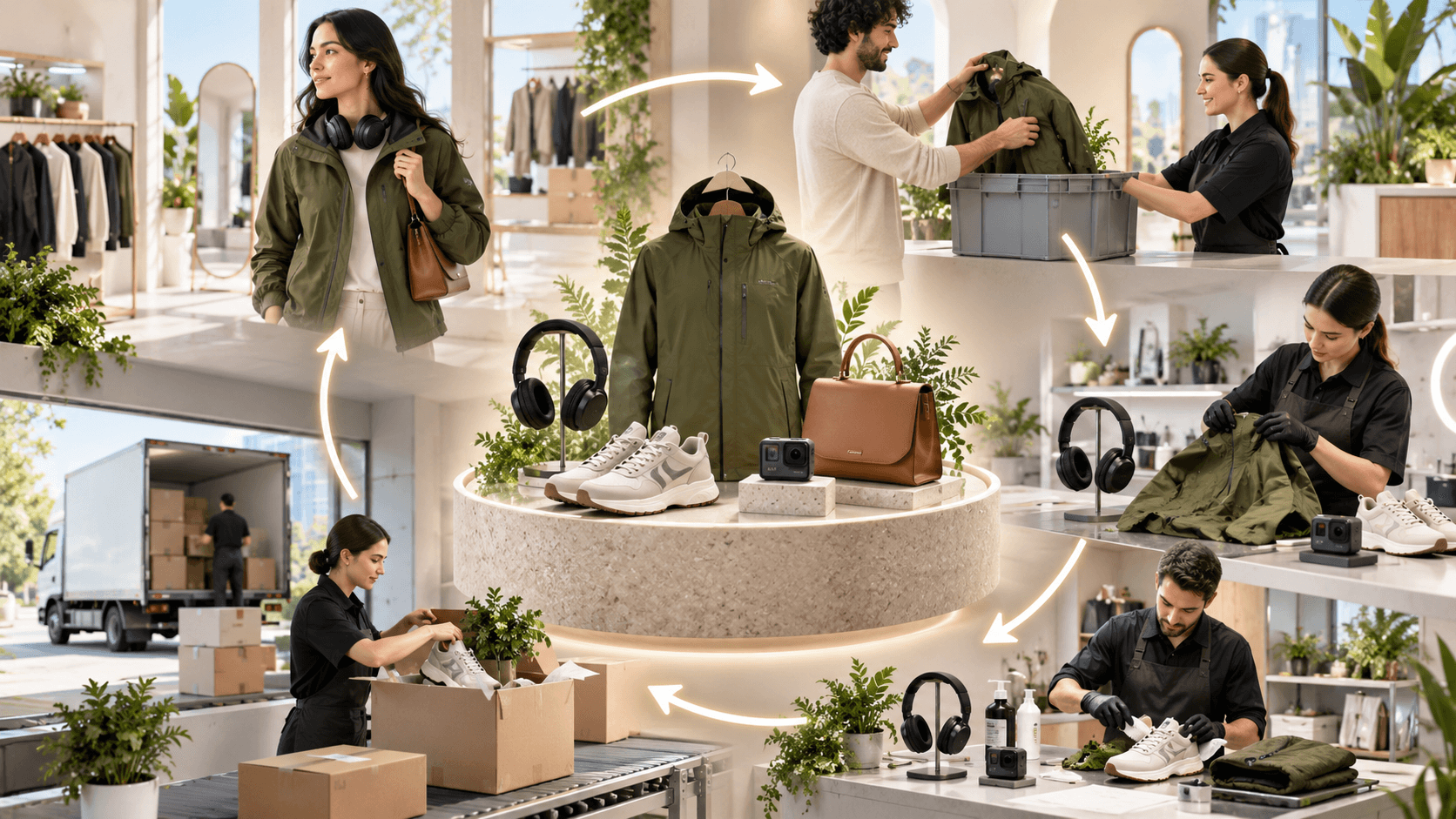
Retail is undergoing a major transformation. For decades, the classic transactional model — buy, own, dispose — has dominated the sector. Today, launching a retail rental business model is no longer a marginal option, it's a strategic necessity for retailers and brands that want to remain competitive and meet the expectations of modern consumers.
The B2C rental market in Europe is expected to grow by 8 to 12% annually by 2027, according to recent sector analyses. This acceleration is not cyclical: it reflects a structural change in purchasing behaviors, amplified by ESG regulatory constraints and climate urgency. Consumers, particularly generations Y and Z, now prioritize product access over ownership — a preference that is reshaping retail value chains.
From transaction to relationship: the paradigm shift
Moving from transactional logic to relational logic requires far more than a pricing change. It means completely rethinking the customer relationship:
- Transactional: a single sale, little post-purchase contact, weak loyalty
- Relational: continuous engagement, multiple touchpoints, enriched customer data, cross-sell and upsell opportunities
Rental creates a lasting relationship. The customer becomes a regular user, generating valuable behavioral data and repeated monetization opportunities. According to adoption data, retailers that have integrated rental offerings see an increase of 25 to 35% in customer lifetime value compared to purely transactional models.
ESG urgency as a growth lever
Regulatory pressure and consumer expectations converge. 67% of European consumers say that sustainability influences their purchasing decisions. The right to repair, ecodesign directives, and product traceability obligations (digital passports) are transforming the legal framework.
Launching a retail rental business model allows you to meet these requirements while creating value. Rental involves:- Better resource utilization (a rented product circulates among multiple users)
- Increased control over product lifecycle
- An opportunity for refurbishment and orchestrated repair to extend product life
- Complete traceability via product digital passports
Why now?
Three factors create a window of opportunity:
1. Technology maturity: SaaS tools enable managing rental, refurbishment, quality control, and second-hand at scale 2. Customer expectation: 52% of consumers say they are ready to rent clothing, accessories, or sports equipment 3. Profitability: brands are seeing higher net margins on rental vs. classic sales, thanks to subscription models and recurring revenue
ue. It's a profitable growth lever, customer loyalty tool, and regulatory compliance mechanism — three simultaneous strategic priorities.
Retailers who act today are building sustainable competitive advantage. Those who wait risk falling behind circular pure-players or competitors already established in this segment.
Launching a retail rental business model: challenges and opportunities
Launching a retail rental business model represents a major strategic turning point for retail brands. Facing saturation in traditional markets and evolving consumer expectations, rental becomes a source of recurring and predictable revenue. This model transforms the customer relationship into a long-term partnership, strengthening loyalty and commercial sustainability.Why switch to rental: a new source of recurring revenue
Rental creates a continuous and predictable revenue stream, unlike a single sale. A customer who rents a product generates monthly or quarterly revenue over 12 to 36 months, whereas a traditional purchase is limited to a one-time transaction.
Market data speaks for itself: rental generates 3 to 5 times more unit margin over the product's lifetime compared to traditional sales. For example, a garment sold for €80 once generates a gross margin of €30-40. Rented at €15 per month for 24 months, it produces €180-240 in revenue with a cumulative margin of €70-100.
Beyond immediate profitability, rental offers:
- Increased average basket size: customers rent multiple products simultaneously
- Reduced customer acquisition cost: natural loyalty through recurring engagement
- Enriched behavioral data: detailed tracking of preferences and usage patterns
- Strengthened ESG positioning: direct response to sustainability expectations (reduction of impulse purchases)
Current retailer barriers and how to overcome them
Three major obstacles hinder adoption of the rental model: complex logistics management, product wear/fraud risk, and lack of operational visibility.
Logistics management and return flows: each rented product must be collected, inspected, reconditioned and re-rented. Without digital orchestration, these cycles become costly and slow. The solution: implement a complete rental management platform that automates allocation, tracking and collection scheduling. Wear, degradation and fraud: the damaged return rate can reach 15-20% without rigorous quality control. Each degraded product reduces useful life and profitability. Integrating systematic product inspection and verification upon return allows you to detect damage, charge appropriate deductibles, and quickly launch reconditioning. Lack of operational visibility: without a centralized dashboard, it's impossible to manage inventory, revenue by product, or rotation rates. A dedicated SaaS platform becomes essential to track KPIs in real time.The ROI of rental vs sale
traditional: key data
The comparative table below summarizes the structural differences:
| Metric | Classic Sale | Rental |
|---|---|---|
| Revenue per unit (12 months) | 80 € (1 tx) | 180-240 € (12-16 tx) |
| Unit gross margin | 30-40 € | 70-100 € |
| Logistics cost | Low (1 shipment) | Moderate (multiple cycles) |
| Customer retention (1 year) | 15-25% | 60-75% |
| Product lifespan | 1 sale | 3-5 users |
| ROI infrastructure (year 1) | – | 6-12 months with volume |
Real case: a fashion retailer with 10,000 items on rental at 20 € per month generates 2.4 M€ in annual revenue. With a 40% margin, this represents 960 k€ of gross contribution, 3x more than a classic sale of the same inventory. Launching a retail rental business model therefore requires an initial technology investment (SaaS platform, inspection, reconditioning) quickly offset by recurring margin and increased customer retention.
Selecting products eligible for rental: criteria and trends
Launching a retail rental business model relies first and foremost on strategic product selection. Not all items are eligible for rental: profitability depends on objective criteria combining lifespan, market demand, and maintenance costs. Poor initial selection compromises the economic viability of the model.Decision matrix: which products to rent?
The selection of products eligible for rental must be based on a multi-criteria decision matrix:
| Category | Lifespan | Market demand | Reconditioning cost | Obsolescence risk | Rental potential |
|---|---|---|---|---|---|
| Consumer electronics | 3-5 years | ⭐⭐⭐⭐⭐ | Moderate | High | ⭐⭐⭐⭐ |
| Premium fashion | 2-4 years | ⭐⭐⭐⭐ | Low | Low | ⭐⭐⭐⭐⭐ |
| Design furniture | 5-10 years | ⭐⭐⭐ | Moderate-high | Very low | ⭐⭐⭐⭐ |
| Sports/leisure equipment | 4-7 years | ⭐⭐⭐⭐ | Low-moderate | Low | ⭐⭐⭐⭐⭐ |
High-rotation products (electronics, fashion) generate more rentals but require fast reconditioning. Long-lifespan products (furniture, equipment) offer stable margins with less maintenance.
Market trends: high-potential categories
Consumer electronics dominate European rental retail. According to Statista (2024), the consumer electronics rental market is growing at 12% annually, driven by:- Refurbished phones and tablets: 67% of consumers accept renting a smartphone rather than buying it
- Laptops and peripherals: strong demand from SMEs and freelancers
- Photo/video equipment: premium niche with high margin
Premium fashion and accessories are exploding: rentals of evening dresses, luxury bags, and jewelry represent 28 billion USD globally (2023). Consumers seek to reduce their carbon footprint while accessing high-end pieces without purchase commitment.
Leisure equipment (
electric bikes, scooters, camping equipment) is benefiting from the post-COVID "experience" trend. Electric bike rentals increased by 45% in France in 2023.
Hybrid models: rental + purchase option
The most innovative retailers combine rental and purchase options. This hybrid model:
- Reduces customer risk (test before purchase)
- Increases conversion (30-40% of renters buy after rental)
- Generates valuable data on actual demand
The security deposit (5-15% of rental price) secures the rental while remaining acceptable to the consumer. Combined with product inspection and verification via RECHECK, it minimizes losses from damage.
Structuring the rental offer: pricing, duration and return conditions
Launching a retail rental business model requires a clear pricing strategy and robust logistics processes. The structuring of your offer determines both profitability and customer satisfaction. According to a McKinsey study (2023), 62% of European consumers are willing to rent non-food products if the price is 30-40% lower than purchase. This opportunity requires precise pricing engineering and frictionless returns management.
Pricing models: from fixed formula to dynamic pricing
The three dominant pricing models address different customer profiles and product categories:
| Pricing model | Calculation formula | Best for | Customer advantage |
|---|---|---|---|
| Fixed monthly rate | 8-12% of purchase price/month (electronics) | Appliances, furniture | Predictability, simplicity |
| Multi-month decreasing rate | Months 1-3: 12%; Months 4-6: 10%; Months 7+: 8% | Premium clothing, fashion | Long-term loyalty |
| Dynamic pricing | Adjustment based on season, demand, inventory | Seasonal fashion, electronics | Margin optimization, flow |
Concrete example: A €800 4K television rented for 3 months would cost €288 (12% × 3 months), 36% cheaper than purchase. For a 12-month rental at decreasing rates, the total reaches €960 (gross margin: €160), encouraging retention.
Optimal rental duration by product
Rental duration should match the customer lifecycle and the product depreciation rate:
- 1 month: Niche electronics (8K camera), seasonal professional tools — high unit margin, high wear risk
- 3 months: Premium fashion, accessories, small appliances
s — sweet spot for customer acquisition
- 6 months: Furniture, fitness equipment, consumer electronics — test duration before purchase
- 12 months: Heavy appliances, designer furniture, vehicles — maximum profitability, customer loyalty
According to Forrester (2024), 58% of retail rentals last 3 to 6 months. Offering a range of durations increases conversion by 23%.
Returns management: logistics and inspection
Returns management is the lifeblood of the rental business model. It determines reusability and margin.
Logistics choices:- In-store pickup: Reduces return costs (€0-5), accelerates reconditioning, creates cross-sell opportunity
- Home delivery + home return: Increases customer convenience, costs €15-25 per cycle, ideal for heavy appliances
- Third-party drop-off point: Cost-convenience compromise, compatible with third-party repair network
The success of launching a retail rental business model rests on this alchemy: transparent pricing, flexible durations, optimized logistics. Retailers that integrate automated inspection and rapid reconditioning capture 40% additional margin.
Measuring profitability and driving rental performance
Launching a retail rental business model without a reliable monitoring system is a major source of failure. According to a Forrester study (2023), 62% of retailers abandon their rental programs due to lack of financial visibility. The key: implement a profitability dashboard and actionable KPIs to adjust strategy in real time.
The 5 critical KPIs to track
To effectively manage your rental, focus on these indicators:
| KPI | Alert threshold | Corrective action |
|---|---|---|
| Customer retention rate | < 50% | Audit customer experience, improve conditions |
| Reconditioning cost | > 30% of rental price | Optimize refit process, reduce frequency |
| Claims rate | > 15% | Strengthen rental conditions, security deposit |
| ROI per product | < 1.2 (payback > 18 months) | Remove from portfolio or increase price |
| Average availability | < 70% | Improve reverse logistics, accelerate cycle |
Example: A product generating €500 in annual revenue for €300 in costs (purchase + reconditioning + logistics) = 66% ROI and 7.2-month payback period. Target: ROI > 100% to consider the product profitable.
Monitoring tools and dashboards
A profitability dashboard
ity centralized is essential. It must integrate:
- Analysis by product category: identify outperforming segments (e.g., home appliances often show 40-50% gross margin) vs. laggards
- Cash-flow forecasts: model the impact of claims, reconditioning delays, and payment cycles
- Product lifetime cost: track acquisition → rental → reconditioning → return → disposal or reuse
- Satisfaction metrics: defect rate, customer complaints, NPS
High-performing retailers (Amazon Renewed, Grover) update this data weekly. This enables rapid detection of unprofitable products and strategy adjustment before losses accumulate.
Continuous optimization: pricing and portfolio management
Price adjustment is a powerful lever. If a category's ROI drops below 1.2, three options:
1. Increase rental pricing by 10-15% and measure impact on retention rate 2. Reduce reconditioning costs via AI-powered remote diagnostics and repair network optimization — this approach can cut costs by 20-30% 3. Remove the product and reallocate budget to profitable segments
How ZIQY addresses this challenge: orchestrating end-to-end retail rental
Launching a retail rental business model requires far more than simply putting products online for rent. It's a complete ecosystem where every step — from initial inspection to post-rental maintenance — directly impacts profitability and customer satisfaction. ZIQY offers an integrated SaaS platform that automates and manages this entire value chain, transforming rental into a sustainable growth lever for retailers and brands.Product-by-product financial visibility
The first challenge for retailers: understanding the real profitability of each rented product. ZIQY centralizes rental data (pricing, duration, rotation frequency) to provide complete visibility by SKU and category. You know precisely which product generates revenue, which item has low rotation rate, and where to optimize your margins.
This financial granularity is crucial: according to a McKinsey study (2023), retailers who track product-by-product rental profitability increase their operating margin by 18 to 22% on average.
Logistics and reconditioning automation
Rental without fast reconditioning is lost revenue. ZIQY's REFIT module — automated reconditioning orchestrates cleaning, repair
minor and article preparation between each rental. Combined with RENTAL management (calendar, reservations, dynamic pricing), the system optimizes rotation cycles.
Concrete benefits:
- Reduction in rental turnaround time (from 5-7 days to 1-2 days)
- Automation of customer notifications (return reminders, extension offers)
- Centralized inventory and product status management
:::tip Accelerate time-to-market Integrate REFIT from launch to avoid logistics bottlenecks. Retailers who automate reconditioning from day 1 reduce their operational costs by 30% in 12 months. :::
Risk reduction through inspection and digital passport
Every rented product carries a risk: degradation, loss, disputes over condition. ZIQY addresses this through two levers:
1. RECHECK — intelligent inspection: condition verification before and after rental, with automated photography and scoring. Zero ambiguity on customer responsibilities.
2. DPP — Digital Product Passport: complete traceability of each item (rental history, maintenance interventions, compliance certifications). This tool is also a compliance asset against new sustainability regulations (EU 2024 directive on repairability index).
Customer loyalty through additional services
Rental alone doesn't build loyalty. Adding services — repair, maintenance, duration extension — transforms the occasional customer into a recurring one. ZIQY's REPAIR network (AI-powered remote diagnostics, technician scheduling, internal and third-party network coordination) enables retailers to offer seamless repair without directly managing repairers.
Concrete use case: A fashion retailer increased customer revenue by 45% in 6 months by combining rental (RENTAL + REFIT) + repair (REPAIR). Customers with access to repair keep their rented items 3x longer and renew their rental subscription 2x more often.:::info Success key Complete orchestration (rental + reconditioning + inspection + repair) generates 3x more value than an isolated rental platform. :::
ZIQY transforms retail rental from an experiment into a predictable and profitable growth machine.
Frequently Asked Questions
What is the market potential for a retail rental business model?
The product rental market is expected to reach 12 billion USD by 2030, with an annual growth rate of 9.2%. In France, 62% of consumers are willing to rent rather than buy fashion and electronics products. This dynamic reflects a profound shift in expectations: sustainability, financial flexibility, and reduction of household clutter are becoming decisive criteria.
How to structure a rental offering as a retailer?
To launch an effective retail rental business model, three pillars are essential: (1) identify product categories with high rental potential (electronics, premium clothing, seasonal equipment), (2) define competitive rental durations (daily, weekly, monthly), (3) implement smooth return logistics. Technology is critical: a dedicated platform enables management of inventory, reservations, and automated reconditioning. ZIQY offers a complete rental management solution, from diagnosis of returned products to their return to circulation.
What operating costs should be anticipated?
Operating costs are distributed
are distributed as follows:
| Expense Item | Estimated Share | Details |
|---|---|---|
| Logistics & transport | 35-40 % | Pickup, return, storage |
| Reconditioning | 25-30 % | Cleaning, repair, inspection |
| Technology & platform | 15-20 % | Booking management, payments |
| Insurance & warranty | 10-15 % | Damage coverage, liability |
A gross margin of 40-50% on rental rates is realistic if product rotation exceeds 6 cycles/year.
Which pricing model to adopt for retail rental?
Three proven strategies:
- Transactional model: per-rental fee (e.g., €15/week for clothing) — ideal for fashion and short-term electronics.
- Subscription model: unlimited monthly flat rate (e.g., €49/month) — builds loyalty and cash flow predictability.
- Hybrid model: subscription + optional add-ons (express delivery, duration extension) — maximizes customer flexibility and LTV.
Retailers adopting a hybrid model record 35% higher customer retention compared to transactional model alone.
How to manage legal compliance and consumer rights?
Since the entry into force of the Right to Repair Directive (EU 2023), retailers must guarantee access to repair for rented products. This includes:
- Availability of spare parts for a minimum of 7-10 years.
- Transparency on product repairability (repairability index mandatory in France since 2021).
- Technical documentation accessible to third-party repairers.
A digital product passport centralizing this data has become essential. ZIQY Digital Passport automates compliance and generates a competitive advantage: consumers instantly access the repair and maintenance history of each rented item.
Conclusion: launching a retail rental business model, the key to circular retail growth
Launching a retail rental business model is no longer a marketing trend: it has become a strategic necessity for retailers who want to remain competitive in the face of evolving consumer expectations and environmental regulations. The numbers confirm it: according to McKinsey, the global product rental market is expected to reach 150 billiards USD by 2025, with an annual growth rate of 13%.
The three fundamental pillars we have detailed — rigorous product selection, optimized operations and profitability management — form the essential architecture for transforming this opportunity into a sustainable competitive advantage.
The three essential pillars
1. Rigorous product selection Choosing the right products to rent is crucial: premium clothing, high-end appliances, designer furniture and sports equipment generate 70% of rental revenue in retail. This selection must be based on strict quality inspection and complete traceability of the product lifecycle. 2. Optimized operations Reverse logistics, cleaning, reconditioning and return management represent 35 to 40% of rental costs. An integrated platform that manages reconditioning and inspection makes it possible to reduce these costs by 20% and accelerate product circulation. 3. Profitability management Controlling customer acquisition cost, optimizing rental rates and minimizing losses (damage, theft, degradation) are essential. Retailers who implement granular financial tracking see their gross margin increase by 15 to 25% in the first year.Future vision: the integrated circular ecosystem
Future success does not rest on rental alone, but on a seamless orchestration between several circular levers:
- Rental for seasonal and premium products
- Repair and AI diagnosis to extend product lifespan
- Second-hand to capture residual value
- Product digital passports to trace and certify each item
This convergence creates a value loop where each product generates multiple revenue streams over its complete lifecycle — far beyond the traditional single-sale model.
Taking action: discover ZIQY
Launching a retail rental business model requires operational expertise, robust technology and clear vision. ZIQY provides all the tools needed to orchestrate rental, repair, reconditioning and traceability in a single ecosystem.Retailers who act now — in 2024-2025 — are building tomorrow's competitive advantage. Those who wait risk finding themselves in a defensive position against pure-play circular competitors.
Ready to transform your business model? Discover how ZIQY helps retail leaders capture 30% additional growth through circular models.Want to go from theory to practice? Discover the ZIQY circular OS.
Request a demo →