
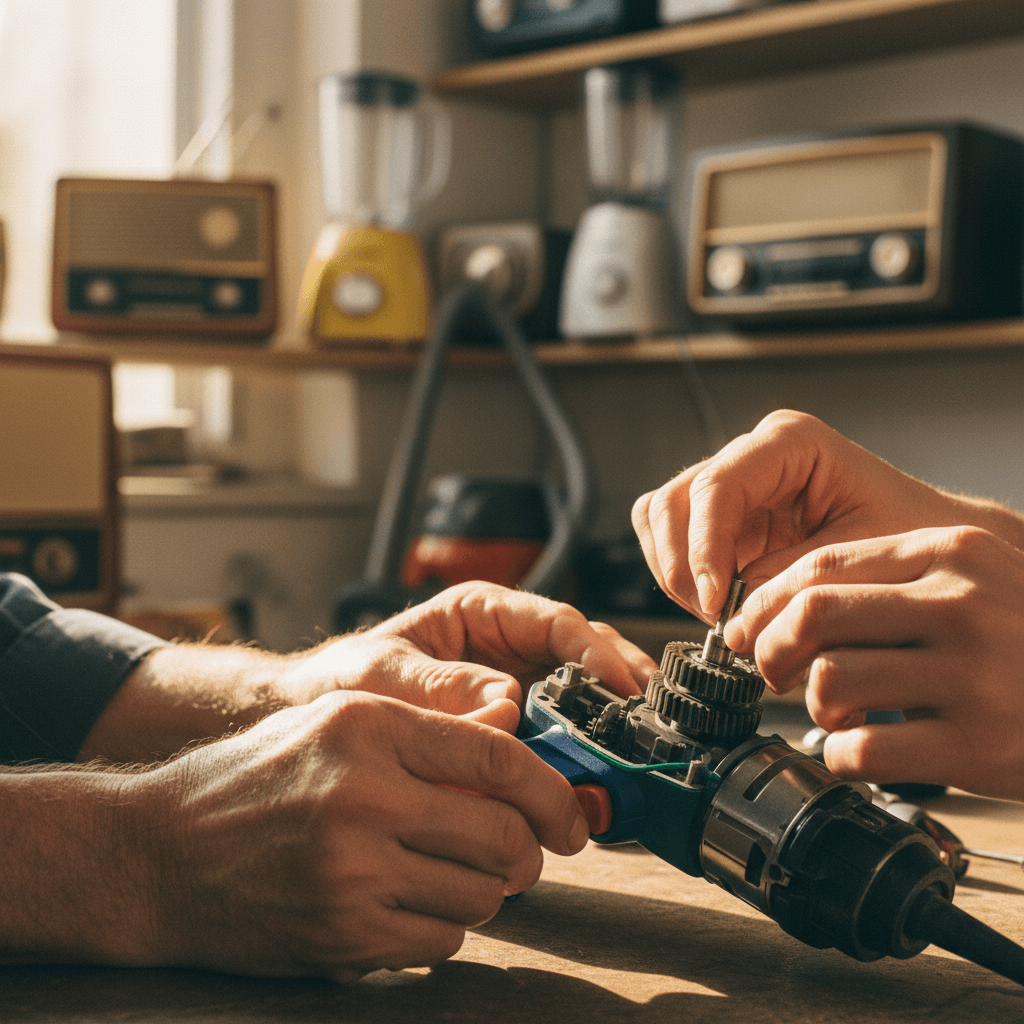
What is the functional economy?
Economic revolution underway
The functional economy represents a fundamental shift in our approach to consumption, moving from ownership to intelligent use of resources.
Say goodbye to the old world of consumption and welcome the functional economy.
It's much more than a new trend; it's a revolution that redefines the very meaning of rental and resource usage.
In this new paradigm, every aspect of rental acquires a new and dynamic dimension. This transformation fits into a circular economy logic where every resource is optimized.
Rethinking our way of consuming
The functional economy involves rethinking our way of consuming and using goods.
This revolutionary approach places usage at the heart of value creation. Rather than acquiring a good to own it, companies access the functionalities they actually need.
Here, value no longer lies in simple possession, but in the intelligent and sustainable use of resources. This philosophy naturally extends to refurbishment and second-hand practices.
It's a model where usage-centered services take center stage, radically transforming our relationship with goods. IT equipment, for example, can be optimized through refit to extend their lifecycle.
Key advantages of this model
- Resource optimization: Every product is used to its full potential
- Cost reduction: Access to functionalities without initial investment
- Reduced environmental impact: Extended equipment lifespan
- Increased flexibility: Rapid adaptation to changing needs
- Integrated maintenance: Support services included in the offer
- Scalability: Ability to adapt solutions to growing needs
The fundamental pillars of the model
The functional economy is based on several essential principles that distinguish it from traditional economic models:
Performance before possession:
- Focus is placed on results obtained rather than on ownership of means
- Performance indicators become central in value evaluation
- ROI measurement is based on actual resource usage
Extended supplier responsibility:
- The provider retains responsibility for the good throughout its lifecycle
- Continuous optimization becomes a direct economic issue
- Refurbishment practices naturally integrate into this logic
Integrated service economy:
- Support services are an integral part of the offer
- The client-supplier relationship evolves toward a long-term partnership
- Continuous innovation is stimulated by this relational proximity
Why now? A modern context
In a world where sustainability is no longer an option but a necessity, the functional economy becomes essential.
Companies face growing environmental challenges. According to ADEME, the functional economy could reduce the environmental impact of economic activities by 20 to 30%.
It responds to the urgency of sustainable consumption models, emphasizing efficiency optimization and innovative resource management.
This approach naturally favors the emergence of a more responsible circular economy. Take-back and second-hand practices fit perfectly into this dynamic.
This is the perfect time to embrace this transformation toward a more responsible circular economy. Environmental regulations reinforce this underlying trend.
Critical issues to consider
- Resistance to change: Traditional purchasing habits may hinder adoption
- Contractual complexity: Service agreements require specific legal expertise
- Performance measurement: KPIs must be redefined to reflect usage value
- Risk management: Responsibility transfer requires careful risk assessment
Comparison of economic models
| Criteria | Traditional Model | Functional Economy |
|---|---|---|
| Basic principle | Purchase = Ownership | Usage = Value |
| Cost structure | High acquisition cost | Pay-per-use |
| Maintenance responsibility | Owner's responsibility | Services included |
| Product approach | Planned obsolescence | Continuous optimization |
| Environmental impact | Strong environmental impact | Integrated sustainability |
| Flexibility | Investment rigidity | Needs adaptation |
| Supplier relationship | Transactional | Partnership-based |
| Innovation | Occasional | Continuous and collaborative |
| Risk management | Buyer's responsibility | Shared or transferred |
Priority application sectors
The functional economy finds particularly relevant applications in several domains:
IT and office equipment:
- Rental of computers, servers, and peripherals
- Refit services to extend lifespan
- IT fleet management as a service
Mobility and transport:
- Shared mobility solutions
- Predictive fleet maintenance
- Journey and consumption optimization
Industrial equipment:
- Rental of machine tools and production equipment
- Integrated conditional maintenance
- Energy performance optimization
Identified success factors
To successfully transition to the functional economy, several elements are determining:
- Clear definition of performance indicators: Measure usage value
- Trust partnership: Establish a lasting relationship with suppliers
- Team training: Support the mindset change
- Adapted information system: Track usage and performance in real-time
The functional economy: Beyond simple rental
Let's now see how the functional economy transcends the traditional notion of rental, bringing unprecedented added value to every transaction.
This revolutionary approach redefines traditional economic models by placing usage at the heart of the value proposition. It fits perfectly into a circular economy approach where every resource is optimized.
From possession to usage: a paradigm shift
The functional economy marks the transition from possession to usage. This fundamental transformation disrupts established commercial codes.
It's a paradigm shift where rental is no longer a simple transaction, but an enriching experience. Users access the desired function without ownership constraints.
Companies and consumers benefit from efficient resource usage, maximizing the value of each product. This optimization enables increased equipment sustainability and significant waste reduction.
Beware of misconceptions
Rental in the functional economy doesn't mean "less control." On the contrary, it offers more flexibility and personalized services than traditional ownership.
Concrete benefits of this approach:
- Reduction of financial risks related to technological obsolescence
- Access to cutting-edge technologies without heavy initial investment
- Maintenance services included in the global offer
- Scalability according to changing business needs
- Positive impact on carbon footprint and sustainability
- Budget predictability through fixed monthly costs
- Transfer of maintenance responsibilities to the supplier
Economic model comparison
| Aspect | Traditional ownership | Functional economy |
|---|---|---|
| Initial investment | High | Low to moderate |
| Obsolescence risk | 100% client | Shared/transferred |
| Maintenance | Owner's responsibility | Included in offer |
| Flexibility | Limited | High |
| Environmental impact | Variable | Optimized by design |
| Scalability | Costly | Integrated into service |
Creating added value through services
In this ecosystem, creating value isn't limited to providing a product, but to offering a complete experience. This holistic approach transforms the client-supplier relationship.
This includes ecological services and personalized solutions, addressing the specific challenges of each user. Support becomes a major differentiating element.
Take-back and valorization of equipment at the end of usage cycle naturally integrate into this sustainable approach. This circular economy maximizes the value of each component.
Typical value-added services
- Preventive and corrective maintenance included
- User training and support
- Continuous technological updates
- Dedicated technical support 24/7
- Usage and environmental impact reporting
- Take-back and refurbishment at contract end
- Usage optimization consulting
- Integrated comprehensive insurance
The pillars of value creation:
- Personalization: Service adaptation to specific needs
- Proactivity: Anticipating needs before they become critical
- Transparency: Detailed reporting on usage and impact
- Continuous innovation: Integration of latest technologies
- Environmental responsibility: Product lifecycle optimization
Points of attention for companies
The transition to functional economy requires internal process overhaul and team training. It's crucial to anticipate this organizational transformation.
This approach also optimizes second-hand flows, where equipment at the end of first cycle finds new life. Refit and refurbishment become strategic value creation levers.
Measurable performance impact:
- 30 to 50% reduction in total cost of ownership
- 25% improvement in equipment availability
- 40% decrease in carbon footprint
- 60% increase in user satisfaction
Additional Content for Functional Economy Article
Market Insights and Industry Data
The functional economy is experiencing unprecedented growth across global markets. According to recent market research, the global circular economy market is projected to reach $2.15 trillion by 2030, growing at a compound annual growth rate (CAGR) of 26.5% from 2023 to 2030.
In the rental and equipment-as-a-service sector specifically, key statistics demonstrate strong market momentum:
- 72% of European companies have already implemented or are planning to implement functional economy models in their operations (Eurostat, 2024)
- The equipment rental market alone is expected to grow from $186.4 billion in 2023 to $267.8 billion by 2030
- Business-to-Business (B2B) functional services account for 58% of total functional economy revenue, with particularly strong adoption in manufacturing, logistics, and IT sectors
- Companies adopting functional economy models report an average 35% reduction in total cost of ownership over a 5-year period
- Environmental impact reduction is substantial: functional economy practices reduce resource consumption by 40-50% compared to traditional ownership models
Sector-Specific Growth Trends
Information Technology: The IT equipment rental and refurbishment sector is experiencing the fastest growth, with a projected CAGR of 31.2% through 2030. Cloud infrastructure and managed IT services now represent $892 billion of the global functional economy market.
Manufacturing and Industrial Equipment: Heavy machinery rental and predictive maintenance services are transforming industrial operations. The industrial equipment-as-a-service market grew 28% year-over-year in 2023-2024.
Transportation and Mobility: Vehicle-as-a-Service (VaaS) and fleet management solutions account for $156 billion of the functional economy, with electric vehicle adoption accelerating this transition.
Real Estate and Facilities: Workspace-as-a-Service and facility management solutions represent a $234 billion market segment, accelerated by hybrid work adoption post-2020.
Real-World Implementation Examples and Case Studies
Enterprise Success Stories
Manufacturing Sector: A leading European automotive supplier reduced equipment downtime by 43% and maintenance costs by 38% by transitioning from equipment ownership to a comprehensive functional economy model. By partnering with equipment providers on performance-based contracts, they achieved better predictability in operational expenses and improved production efficiency.
Technology Companies: Major IT infrastructure providers now operate on functional economy principles, with customers paying for computing capacity and storage usage rather than purchasing hardware. This shift has increased customer retention rates by 52% and reduced churn in the enterprise segment.
Logistics Operations: A multinational logistics company implemented a fleet-as-a-service model, reducing capital expenditure by $47 million over three years while simultaneously decreasing their carbon footprint by 34% through optimized vehicle utilization and electric vehicle integration.
Sustainability Impact Metrics
Organizations implementing functional economy models demonstrate measurable environmental benefits:
- Material waste reduction: 45-60% less electronic waste through extended equipment lifecycles
- Energy consumption: 30-40% reduction in manufacturing and transportation emissions
- Water usage: 25-35% decrease in production-related water consumption
- Landfill diversion: 78% of equipment components recycled or refurbished rather than discarded
FAQ
What is the difference between the functional economy and the sharing economy?
While often used interchangeably, these concepts differ significantly. The functional economy focuses on providing specific functionalities or services through long-term, performance-based relationships—typically between businesses (B2B). The sharing economy emphasizes peer-to-peer (P2P) or consumer-to-consumer (C2C) temporary access to underutilized assets. The functional economy is more structured, contractual, and outcome-driven, whereas the sharing economy prioritizes access flexibility and community participation. For example, a company renting industrial machinery under a performance contract operates in the functional economy, while individuals sharing parking spaces through an app operate in the sharing economy.
How does the functional economy reduce costs for businesses?
The functional economy reduces costs through multiple mechanisms: elimination of capital expenditure (businesses pay operational expenses instead of upfront purchases), predictable budgeting (fixed monthly or usage-based fees replace unpredictable maintenance costs), optimized resource utilization (shared equipment achieves higher utilization rates), and included maintenance and support (service providers manage upkeep, reducing internal overhead). A 2024 Deloitte study found that businesses using functional models reduced total cost of ownership by an average of 35% while simultaneously improving operational efficiency and asset performance.
Can small and medium-sized enterprises (SMEs) benefit from the functional economy?
Absolutely. SMEs often benefit more significantly than large enterprises from functional economy models because they have limited capital for equipment purchases and maintenance infrastructure. By adopting equipment-as-a-service or software-as-a-service models, SMEs can access enterprise-grade resources without substantial upfront investments, improve cash flow, and scale operations flexibly. Recent data shows that 68% of SMEs that adopted functional economy solutions reported improved financial performance, with particular benefits in manufacturing, professional services, and technology sectors.
What role does technology play in enabling the functional economy?
Technology is fundamental to functional economy operations. Internet of Things (IoT) sensors enable real-time equipment monitoring and predictive maintenance, artificial intelligence optimizes resource allocation and demand forecasting, blockchain ensures transparent supply chain tracking and circular economy verification, and cloud platforms facilitate seamless service delivery and performance measurement. Advanced analytics allow providers to monitor equipment health, predict failures before they occur, and optimize utilization rates—capabilities that make performance-based contracts economically viable and attractive to customers.
How does the functional economy contribute to corporate sustainability goals?
The functional economy directly supports corporate Environmental, Social, and Governance (ESG) objectives by reducing resource consumption, extending product lifecycles, and minimizing waste. Companies that adopt functional models can achieve substantial carbon footprint reductions (30-40% average), improve supply chain transparency, and demonstrate commitment to circular economy principles—increasingly important for investor relations and regulatory compliance. Additionally, functional economy providers often implement sustainable manufacturing practices, use renewable energy, and develop take-back programs, allowing corporate clients to meet ambitious net-zero targets without requiring internal transformation of their entire operations.
Want to go from theory to practice? Discover the retailers that chose ZIQY.
Request a demo →